
A coordinated insurance program
Protect the people, instruction, property, and events behind your studio
A single policy may not address every exposure. A martial arts insurance program can combine liability, participant protection, property, employee, and specialty coverages based on the studio’s operations and carrier eligibility.
Students and visitors
Training injuries, slips and falls, damaged property, and claims involving spectators or visitors can create third-party liability exposures.
Instruction and supervision
Allegations involving teaching, coaching, safety rules, supervision, or failure to respond appropriately may require specialized protection.
The business itself
Mats, mirrors, equipment, tenant improvements, income, staff, member records, and leased premises each need a deliberate review.
Coverage building blocks
Insurance a martial arts school may consider
The right combination depends on the disciplines taught, participant ages, level of contact, competitions, staffing, contracts, premises, and state. Coverage descriptions are general starting points, not a universal package.
General liability
May respond to covered third-party bodily injury, property damage, and premises claims involving students, parents, spectators, or other visitors.
Professional liability
Can address certain covered allegations arising from instruction, coaching, supervision, or the professional services the studio provides.
Participant accident
May provide limited medical benefits for covered participant injuries regardless of fault, subject to policy terms. It does not replace general liability.
Abuse and molestation
Specialized coverage may address covered allegations involving abuse or misconduct. Eligibility can depend on screening, supervision, reporting, and other controls.
Commercial property
May protect mats, bags, pads, mirrors, training equipment, merchandise, furniture, electronics, tenant improvements, and other business property.
Business income
Can help replace covered lost income and certain continuing expenses when insured property damage interrupts studio operations.
Workers’ compensation
Provides statutory benefits for covered employee injuries and occupational illnesses. Requirements, exemptions, and classifications vary by state.
Cyber and crime
Options can address member and employee data, payment systems, funds-transfer fraud, and certain covered theft by employees or others.
Umbrella liability
Adds limits over scheduled underlying liability policies when a severe covered claim exhausts the available underlying limit.
Youth programs and misconduct risk
Coverage and documented safeguards should work together
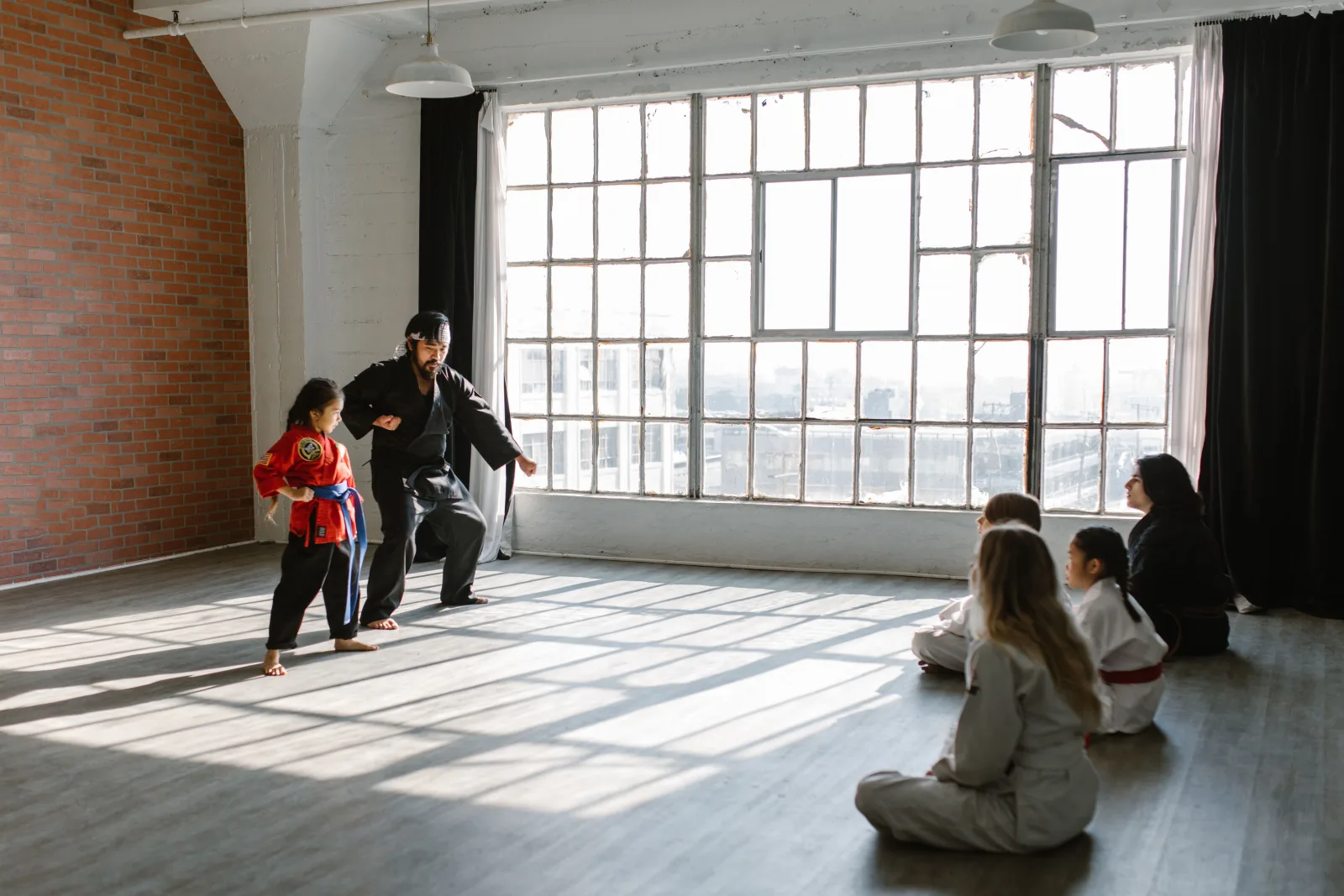
Studios serving minors may face heightened expectations around instructor screening, physical contact, changing areas, transportation, private lessons, camps, digital communications, and mandatory reporting. Carriers may ask for written policies and evidence that the studio consistently follows them.
Common controls include background checks, reference checks, open and observable training areas, rules for one-on-one instruction, more than one screened adult when practical, parent communication standards, documented incident reporting, and prompt escalation procedures.
Describe the operation precisely
Programs and activities that can change underwriting
A low-contact instructional program is not automatically evaluated like a full-contact competitive gym. Disclose every discipline and activity before relying on a quote.
Style and level of contact
Karate, taekwondo, judo, Brazilian jiu-jitsu, boxing, kickboxing, MMA, self-defense, fitness classes, sparring, grappling, and full-contact training can have different carrier appetites.
Competitions and special events
Tournaments, exhibitions, belt tests, seminars, camps, birthday parties, and offsite demonstrations may require event-specific review, certificates, or additional insured status.
Weapons and specialized training
Training with swords, staffs, knives, firearms, improvised weapons, breaking materials, elevated obstacles, or other specialized equipment should be clearly disclosed.
Independent instructors
Contract instructors can create coverage, certificate, payroll audit, and worker-classification issues. A contractor label alone does not determine legal status or insurance responsibility.
Transportation and offsite activity
Transporting students, employees, or equipment may require commercial auto, hired and non-owned auto, driver controls, and a review of personal vehicle use.
Related services
After-school care, childcare, massage, physical therapy, retail sales, food service, day camps, overnight trips, and subleasing space can add separate exposures.
Waivers and risk management
A signed waiver is useful, but it is not an insurance policy
Participant agreements, informed-consent forms, emergency contacts, health information, safety rules, and waivers can support a risk-management program. Their enforceability varies by jurisdiction and circumstance, and they may not prevent a claim from being filed.
Maintain consistent instructor qualifications, equipment inspections, mat cleaning, first-aid readiness, incident documentation, concussion protocols, return-to-training procedures, and emergency action plans. Have a qualified attorney review legal documents used by the studio.
Prepare for the market
Information an agent may need to evaluate the studio
| Area | Useful information |
|---|---|
| Programs | Disciplines taught, class descriptions, participant ages, contact level, sparring, weapons, camps, competitions, and offsite activities |
| People | Student count, employee and contractor roles, payroll, instructor credentials, screening, youth supervision, and volunteer use |
| Premises | Owned or leased space, square footage, mats, equipment, tenant improvements, security, occupancy, and landlord requirements |
| Risk controls | Waivers, safety rules, incident procedures, emergency plans, equipment inspections, background checks, and misconduct-prevention policies |
| Events and travel | Tournaments, seminars, demonstrations, camps, facility rentals, transportation, certificates, and additional insured requirements |
| Insurance history | Current policies, loss runs, claim details, corrective action, cancellations, nonrenewals, and prior coverage gaps |
Common questions
Martial arts studio insurance FAQ
Does a martial arts studio need both general and professional liability?
They address different allegations. General liability commonly addresses covered bodily injury, property damage, and premises claims, while professional liability may address covered allegations involving instruction, coaching, or supervision. Policy structures vary, so confirm whether both are included.
Are student injuries automatically covered?
Not every injury is automatically covered. The circumstances, allegations, policy wording, exclusions, and available participant accident coverage all matter. Disclose the disciplines and contact level so coverage can be evaluated accurately.
Do waivers eliminate the need for insurance?
No. Waivers can support risk management, but enforceability varies and a waiver may not stop a claim from being made. Insurance, documented safety practices, and legally reviewed participant agreements serve different purposes.
Are tournaments and offsite demonstrations included?
Not necessarily. Events away from the scheduled premises may require prior notice, a special-event endorsement or policy, certificates, additional insured status, or separate participant and spectator protection.
Do independent instructors need their own insurance?
They may. The studio should review contracts, certificates, additional insured requirements, policy definitions, and who is insured for instruction. Worker status depends on applicable law and the actual relationship—not only the title used.
Can a studio insure its mats and training equipment?
Commercial property or inland marine coverage may protect eligible business property, subject to the insured location, valuation method, limits, deductibles, exclusions, and whether equipment travels to events or other locations.
Coverage note: This page provides general insurance information. Actual coverage is governed by the policy’s terms, conditions, limits, deductibles, endorsements, and exclusions. Requirements and availability vary by state and carrier.
Start a conversation
Request a martial arts studio insurance review
Tell us what you teach, who participates, and which activities take place at or away from your studio. A Merimack agent can follow up about available options.
- No obligation to purchase
- Coverage depends on carrier and state availability
- Your details go directly to Merimack